Monster Train 2 is the sequel to the 2020 deck-building roguelite, built around defending a train that climbs through stacked underworld tiers, and it is one of the three PlayStation Plus Essential games for November 2026: claimable on PS5 from November 3 to November 30, 2026. This page covers how a run works, how to draft with intent, and where the game came from.
Background
Monster Train 2 is the sequel to Monster Train, the 2020 deck-building roguelite that defined the vertical-lane genre. It is developed by Shiny Shoe — the studio behind the original — and published by Big Fan Games, launched on Steam on May 21, 2025, and the November 2026 PlayStation Plus window is its route onto PS5: claimable for Essential members from November 3 to November 30, 2026. The sequel keeps the premise of defending a train carrying the last phoenix across the underworld, and expands the roster of factions and the deck-building systems around it.
How the Game Works
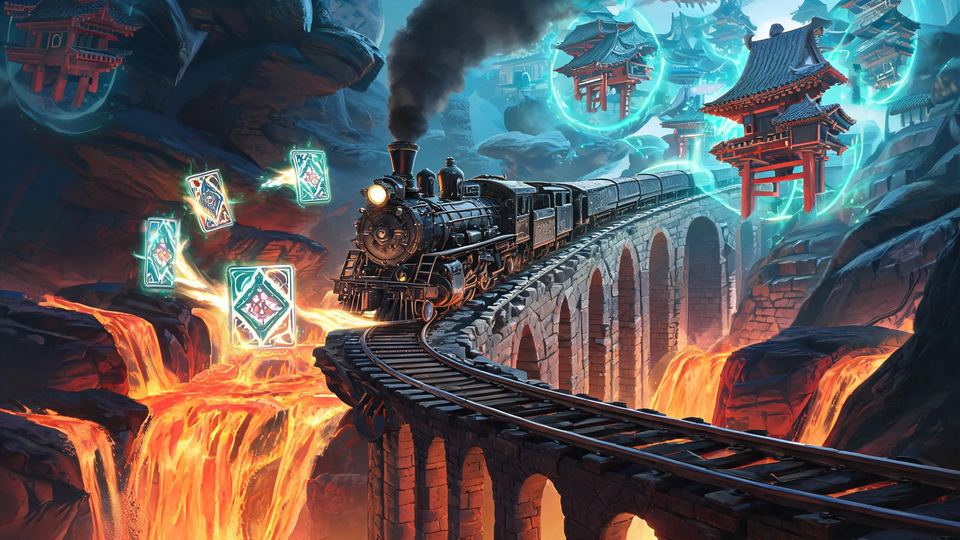
Monster Train 2 is a deck-building roguelite played as vertical tower defense. Enemy waves climb toward your train through stacked lanes, and between fights you draft cards, relics and upgrades that reshape the deck you will play the next wave with. Factions — celestial and infernal among them — each run on their own damage economy, and the sequel's own pitch — “Protect the Pyre, Conquer the Frost” — sets the factions against a new threat from the ice. A run is a sequence of escalating fights: summon units, cast spells, and hold the lanes before the train's core is reached. Losing a run costs the run, not the progress: unlocks, new cards and new factions persist, which is what makes the genre replayable.
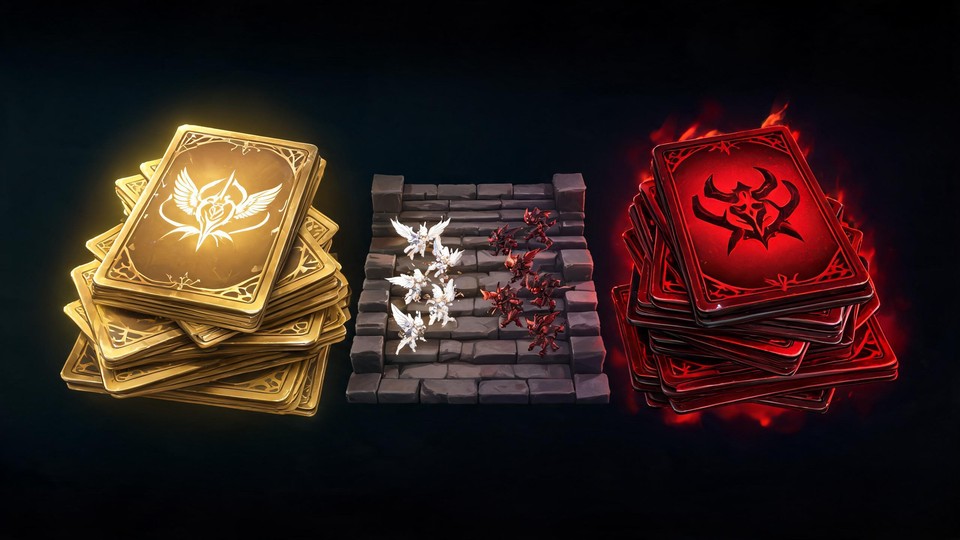
Between fights sits the draft: pick a few cards from a choice of offers, and the deck you bring to the next wave is the sum of those picks. The sequel's headline twist is the alliance — two factions combined into one deck — which multiplies both the synergy space and the number of bad decisions a run can make. Persistence is the other half of the loop: completed runs bank currency toward permanent unlocks that widen what the next run can draft.
Deep Strategy
- Commit to one or two elements early. A deck that spreads across every faction does mediocre work everywhere; the runs that hold the late waves are built around one economy plus a single complementary second.
- Draft the board, not just the cards. Lane upgrades, gates and structures are the part of the build most players underweight; a weak deck behind a strong board still holds, and the reverse collapses.
- Position for trades. The stacked lanes mean placement decides who attacks whom; keep a cheap answer for the fastest enemy in the current wave rather than dumping everything into the heaviest.
- Read relics as deck directions. A relic that rewards one damage type is a hint about which cards to take next; treat every draft as a conversation between the three.
- Expect the reset. The design teaches by repetition: each lost run narrows the next one's choices. The first hour is a tutorial by structure, not by menu.
Choosing Your Factions
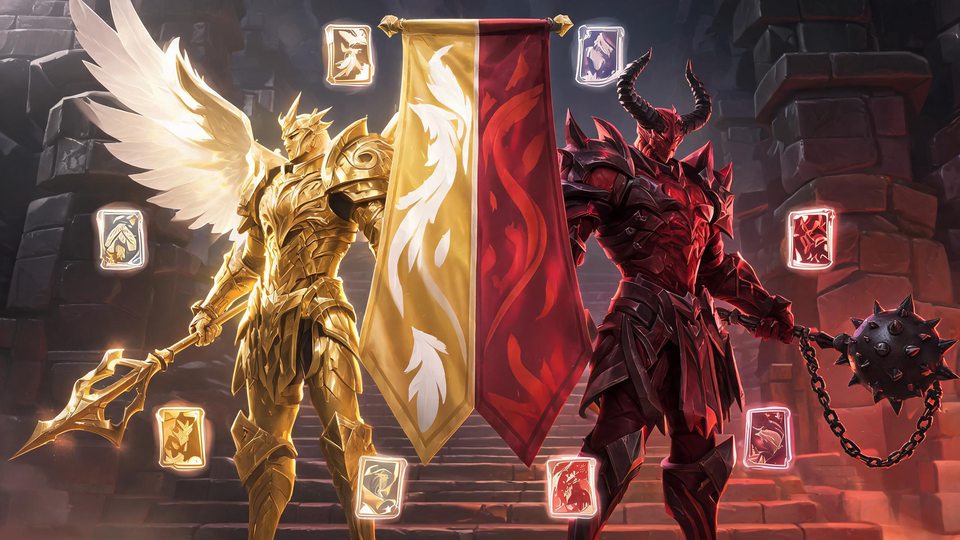
Your "character" in Monster Train 2 is a pair of factions, and the alliance you lock in at the start of a run decides the shape of every draft choice after it. For first runs, take the pairing the game offers rather than forcing a favorites combo: one faction that holds lanes and one that closes waves is the stable template. Read the pyre bonus before you commit — it is the alliance's win condition in one sentence, and a deck that ignores it drafts cards for a fight it is not in. As unlocks widen, the useful habit is pairing a faction you understand with one you have never run, so half of every new deck is known ground.
The core factions carried over from the original set the grammar, and the sequel widens the roster around them:
- Frostborne: ice and slows that lock an advance in place.
- Immola: raw burn damage and spell-boosted aggression.
- Verdania: thorns, growth and value that compounds across a fight.
- Umbra: stealth units and cheap, brutal spikes.
- Skyward: buffs, shields and angelic sustain.
- Hellborne: ambushes that spawn behind your line.
- Gatewatchers: siege engines and gate play that win long fights.
With a pairing chosen, follow the first-run walkthrough to survive your opening ten games, then branch out through the November lineup hub.
Walkthrough: Your First Run
- Pick one defensive faction and one tempo faction. The new-player shortcut to a stable alliance: one side holds the lanes, the other closes waves out early.
- Draft for the first three fights, not the last one. Early waves kill weak decks outright; take the board and unit cards that survive now and pivot to win-condition cards once you are stable.
- Upgrade the gates before the spells. Lane structures are the part of the build most first runs underfund; a wall that holds one extra wave is worth more than a card you never get to play.
- Keep one answer for speed. Every wave has a fast unit racing for the core; reserve a cheap instant or a small body for it instead of committing everything to the heavy push.
- Let the run go when the economy breaks. A lost run still banks unlocks — the fastest way through the tutorial-by-repetition is quitting a doomed attempt early and starting a sharper one.
The Upgrade Economy
Monster Train 2 runs two economies at once. Inside a run, gold buys cards, relics and upgrades from the shop between fights, and those choices define the deck you finish with — they evaporate when the run ends. Outside a run, completed waves bank permanent unlocks: new cards, new faction tools and new alliance options that widen what the next run can draft. The habit that separates stalled players from improving ones is spending the first ten runs on unlocks, not wins: a loss that banks unlocks is a productive loss, and the meta-progression is the real tutorial.
Inside the run, the upgrade priority is structural before flashy: gates and lane upgrades hold waves long enough for your card economy to reach its win condition. A card you never afford because you died on wave four is worth less than a wall that gets you to wave eight.
How to Clear a Run
A run is a ladder of waves climbing through the underworld's stacked tiers. The clearing grammar is consistent: every wave attacks your lanes, fast units race for the core while heavy bodies grind the gates, and the answer to almost every bad fight is the same three moves — hold the line where the tier narrows, spend removal on the speed threat instead of the tank, and let your spells answer the wave your units cannot.
The final fight is a deck check, not a reflex check: it punishes the build that drafted for tempo only. By the last wave you want one answer to swarms, one answer to a single big body, and one emergency gate repair. If a run cannot name those three cards out loud, it was a tempo run that will stall at the top — draft the missing answer next time.
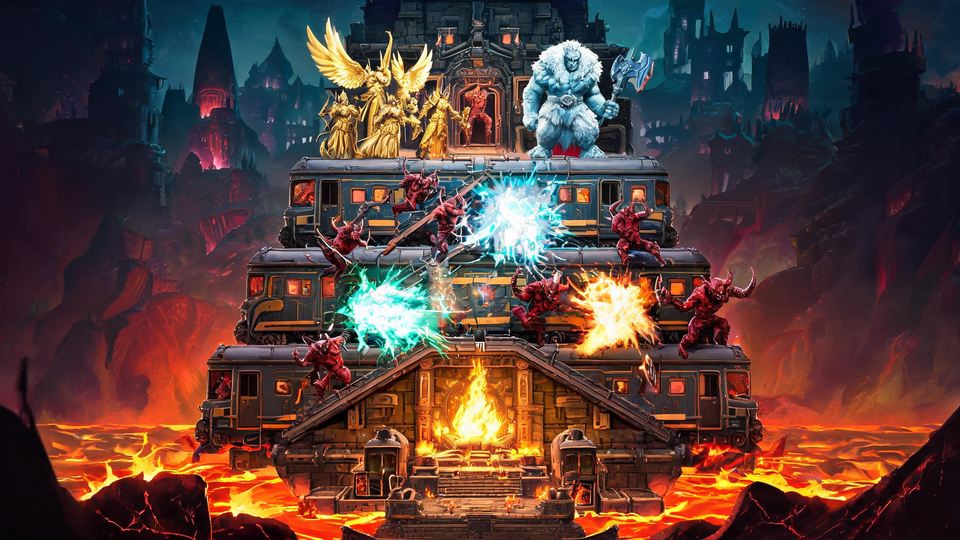
Every wave like the one above hangs on the pairing you locked at the start: the seven core identities are listed in Choosing Your Factions, and the run order lives in Your First Run. Claim steps for all three games are in the November hub.
News & Trivia
The original Monster Train made Shiny Shoe's name in 2020; the sequel launched on Steam on May 21, 2025 with Big Fan Games publishing, expanding the faction roster and the alliance-building between them. For the November 2026 lineup, the notable angle is the platform: the game reaches PS5 through the Essential claim window, alongside a co-op zombie RPG and a preserved adventure trilogy — a month that spans three very different genres.
Cosplay
The faction roster is built on strong, readable silhouettes — cloaks, masks, floating familiars and halo shapes — which is what makes roguelite characters worth building for. Costume work leans on shape language rather than exact replication, since the art style is stylized. Our cosplay column publishes original character studies, not photographs: see the cosplay index for how we handle costume detail.
- Faction banner prints: gold-and-feather or crimson-and-horn motifs read instantly on a cape or tabard.
- Pyre lantern prop: a warm glow effect carries the theme without a full costume.
- Conductor silhouette: layered plates and a train-staff prop for the crew look.
Community & Guides
Roguelite knowledge moves fastest in player communities: the Monster Train subreddit and the Steam community hub are where alliance reports, card evaluations and patch reactions surface first. Official screenshots and trailers are on the store pages linked under Official Channels; the artwork on this page is our rendering, not a capture.
Official Channels
- PlayStation Plus — claim the game in the November 2026 window.
- Monster Train official site — the series hub.
- Shiny Shoe — the developer's site.
- Steam store page — the PC release, for comparison with the PS5 version.
Also In This Lineup
This title is one of three Essential claims for November 2026: Dead Island 2 guide and Tomb Raider IV–VI Remastered guide cover the other two, and the full lineup page has the shared claim steps.
Update Rule
Claim facts come from Sony's October 28, 2026 announcement; development facts come from the publisher's own pages and dated coverage. We record what was checked, and when.